My first day in DC yesterday was somewhat exhausting because I had flown in on a red eye flight without much sleep the night before. Today, I was re-energized. I slept well, had some coffee, eggs, and electrolytes before leaving my apartment, so I felt ready to see more of the sights.
As I was enjoying my coffee this morning, a small red finch landed on my windowsill. In just the day I have been here, I have really enjoyed watching the neighborhood backyard birds on my walk from my Airbnb to the Metro.
The birdsong is definitely different here than it is in the Pacific Northwest.
This morning I was on my way to the Museum of African American History and Culture. I had a glimpse of the building yesterday when I visiting the Smithsonian Museum of American History Museum and the Museum of Natural History, so it was nice to know where I was heading today.

Walking into this museum was a calm, relaxing, breath of fresh air compared to the chaos I experienced at the other Smithsonian museums yesterday.
The lobby is large and minimalist. My guess is later in the day, the crowds will be bigger and the chaos of school groups on field trips will change the vibe, however, now at 10:00 a.m. when the museum opens, the lobby is a calm place to be. Tickets for this museum are required and specify which time of day you can arrive, so if anyone is planning to visit, I highly recommend choosing a time early in the day. I was appreciative to have the calm and quiet to experience the exhibits.
I went to the lower floor gallery which begins the chronological retelling of slavery beginning in the 15th century. As you proceed through the timeline, the museum takes you gradually up to the2nd and 3rd floors which progress through reconstruction, civil rights, and eventually the 21st century and Barack Obama’s presidency.
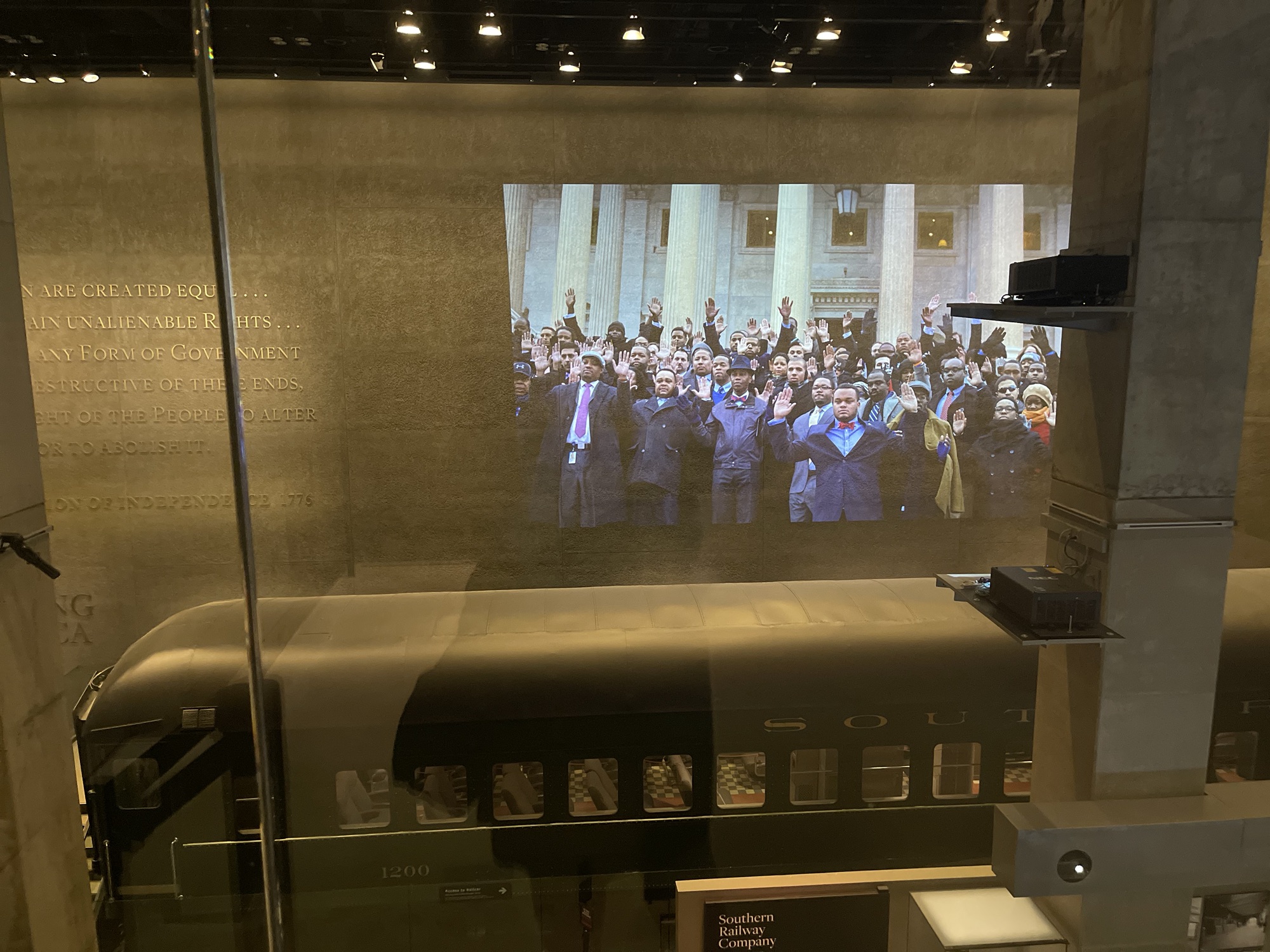
When entering the first gallery, I looked out over a glass balcony at a later part of the exhibit which had a full-size train car on a lower platform, and images projected on the wall depicting many different scenes from all periods of history.

The train car (I learned laterloved how the imagery juxtaposed with served as foreshadow.

You step down a flight of stairs to enter the first history gallery which is dramatically dark, and recounts what was going on in the world, both politically and economically, which were drivers for slavery. The exhibits are presented using multimedia, artifacts, and narrative.

As history unfolds, personal stories of slaves are interwoven. Each turn you take, there are more artifacts such as shackles of how people were chained, including shackles for small children. It was is a moving, immersive, experience to hear the personal stories, see the various artifacts like the auction block and shackles. Seeing shackles for babies and small children was extremely powerful.


Exhibits also displayed letters, notes, bills of sale, photographs, and slave quarters were among the artifacts on display.


A small cabin from the Point of Pines Plantation in Southern Carolina served as a shelter or pen, a home, and perhaps a gathering place for friends and neighbors.
When I was a kid, I remember loving to hear stories of Harriet Tubman and her bravery in helping lead people to freedom. She was a childhood hero of mine. Within the museum, there were a few different places highlighting Harriet, and a few of her personal items were on display, but I wish there had been a more prominent exhibit about her.
The exhibit winds up from the lower level to a second and third level eventually, and as you ascend up, history also moves ahead.

There was a floor dedicated to reconstruction, civil rights, the important leaders of that time, as well as Jim Crow laws in the south.

I was particularly drawn to a quote highlighted on the wall by James Baldwin.
The great force of history comes from the fact we carry it within us, are unconsciously controlled by it…history is literally present in all that we do.
James Baldwin

On the third floor, more contemporary events and influencers are highlighted including Barack Obama’s presidency and of course Oprah is also featured here.

Check out a few video highlights included of the museum in one of my Instagram reels.
The history sections conclude with events and notable figures from the 21st century including the presidency of Barack Obama, Anita Hill testimonies, Oprah’s impact in media and culture, the Black Lives Matter movement, and other notable public figures, milestones, and struggles.
There is a permanent exhibit on the upper floor of the museum highlighting film, music, art, and other artists in popular culture.
I also checked out a temporary exhibit called Afrofuturism which highlights the expression of Black identity, agency and freedom through art, creative works and activism that envision liberated futures for Black life. This exhibit includes the Red Starfleet uniform worn by Nichelle Nichols as Lt. Uhura on Star Trek, and memorabilia from Prince including a guitar and costume.


This was a beautifully-curated and thought-provoking museum which both presents historical events and the historical trauma and racism that is interwoven into our nation. More than this, the museum connected me with the human experience of the events in a way I had not experienced before.